How to Start an Online Clothing Store: From Business Plan to Your First Sale
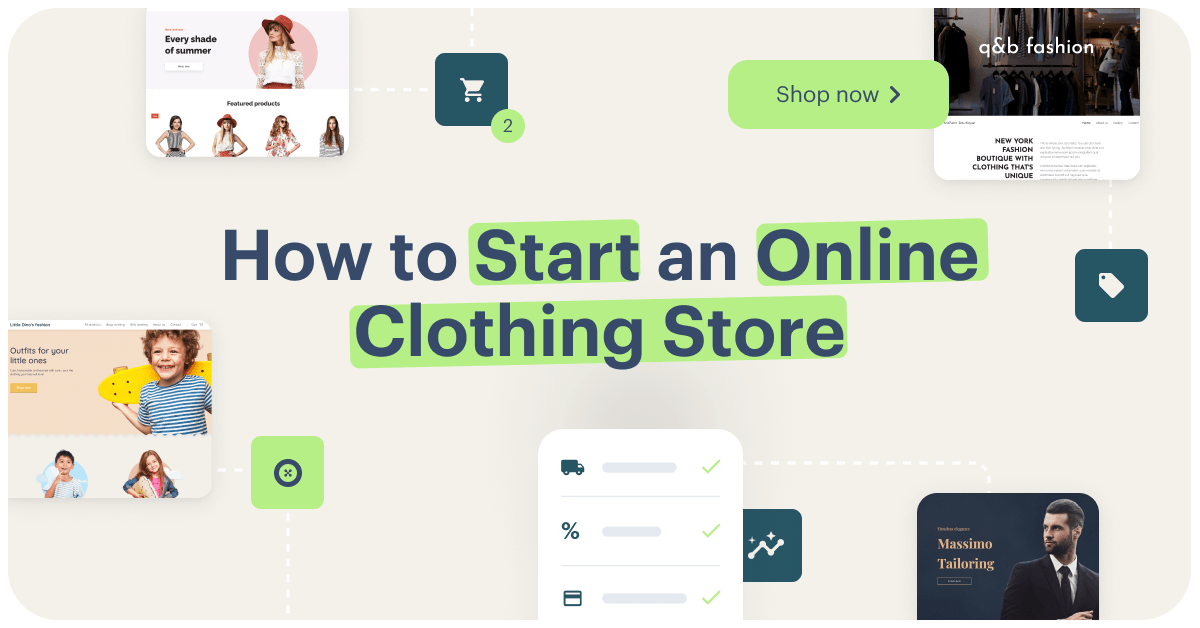
Starting an online clothing store involves choosing a business model, sourcing products, setting up an e-commerce site, and marketing your products to a target audience.
Gone are the days when you needed to worry about renting a storefront or dealing with expensive inventory headaches. Today, you can handle everything from your kitchen table with significantly less risk.
In this guide, we are going to walk you through exactly how to take your online clothing store from idea to first sale.
Before you start your clothing business
Before you start, you need a clear business plan. You should know what you’re selling and who you’re selling to before building your website.
Decide what to sell and define your business model
First of all, a new clothing line requires choosing the business model. You can design and manufacture your own pieces, or source wholesale clothing and add your branding.
Here are a few common clothing business models to consider:
- Handmade and custom clothing gives you complete creative control. This works well for unique, limited-edition collections. The trade-off: higher production time and initial costs.
- Print-on-demand services remove inventory risk entirely. You upload designs, customers order, and a partner company prints and ships the items. You never handle physical inventory.
- Wholesale and white label options let you buy ready-made clothing in bulk and sell it under your brand name. This path requires more capital upfront, but lets you build inventory and fulfill orders immediately.
Estimate your startup costs
Tracking your expenses helps you understand your real startup costs. This helps you avoid overspending and keeps your business sustainable.
Basic costs include:
- Domain name registration: around $10-15 annually
- Website hosting and platform fees: $10-30 monthly
- Business registration and licenses: varies by location, typically $50-500
- Initial inventory or product samples: $200-2,000, depending on your model
- Photography equipment or services: $0-500 if you shoot your own products
- Marketing budget: $100-500 to start
Find suppliers for your clothing business
Your supplier affects your profits, product quality, and customer satisfaction. Research suppliers carefully before placing large orders.
- For wholesale purchasing, trade shows and online wholesale marketplaces offer good starting points. Requesting samples before placing large orders helps you verify quality.
- Custom manufacturing connects you with local sewers, textile manufacturers, or overseas production facilities.
- Print-on-demand requires no supplier negotiation. You simply integrate with services like Printful through your online store.
Register your business
Operating legally protects you and builds customer trust. Requirements vary by country and region, but most online clothing businesses need:
- Business structure selection: sole proprietorship, LLC, or corporation
- Business name registration
- Tax identification number
- Sales tax permits: if required in your area
- Business bank account
Your local Small Business Administration can provide specific requirements for your area. An LLC often makes sense for clothing businesses because it separates personal and business liability.
Building your clothing brand identity online
Your brand is more than a logo. Think of your brand as a personality, made up of:
- Brand name: It works best when it's memorable, available as a domain, and reflective of your style. Learn more about choosing a branded domain name that relates to your audience.
- Logo: Keep it simple. The most recognizable fashion brands have clean, adaptable logos.
- Design: For a clean look, use a color palette consisting of 2-4 colors. Your fonts match your brand personality: elegant serifs for luxury, bold sans-serifs for streetwear, playful scripts for youth fashion. Building a brand from scratch requires these foundational elements.
- Brand voice: It can be casual and friendly or sophisticated and aspirational. Product descriptions, social media posts, and customer emails all benefit from a consistent tone.
Create your online store for free
Starting an online clothing store with Webnode: Step-by-step
Webnode streamlines the technical process so you can focus on your products and customers. The platform includes everything you need to make an online boutique. Learn how to create an online shop with this step-by-step approach.
Step 1: Create your Webnode account and pick a template
Before worrying about costs, you can start building your store immediately for free. Go to the Webnode and register your e-shop. Once you’re in, you will be asked to choose a template.
Webnode provides professionally designed online store templates built for clothing ecommerce. You can browse options and select one that matches your brand aesthetic.
The drag-and-drop editor makes changes simple. You can create a clothing website that reflects your unique style without technical skills.
Step 2: Add your products
Quality product listings sell clothes. Each product page benefits from these elements:
- Clear product titles include the item type and key feature: "Vintage Wash Denim Jacket" rather than just "Jacket."
- Detailed descriptions cover materials, fit, care instructions, and what makes the piece special. Helping customers imagine wearing it increases conversions. Learn more about optimizing your product detail page for better sales.
- Multiple high-quality photos show front, back, detail shots, and the item being worn when possible. Customers can't touch or try on clothes online, so your images tell the whole story.
- Product variants for different sizes and colors use Webnode's product variants feature. Customers can select their preferences without navigating to separate product pages.
Step 3: Choose the right Webnode plan to launch
Now that you have your template set up and a few products added, it’s time to pick a plan that lets you sell to the public.
Webnode offers multiple pricing tiers based on your needs. Check our e-commerce website pricing to find the right plan.
Standard
- Online store functionality
- Bandwidth: 10 GB
- 3 GB storage
- No transaction fees
Profi
- Unlimited products
- Unlimited bandwidth
- 7 GB storage
- Discount codes and vouchers
- Free shipping options
- Product variants: different sizes and colors
Tip: Starting with Profi makes sense if you plan to offer multiple product variants. Clothing naturally comes in different sizes and colors, so having that flexibility from the beginning helps when you make an online clothing store. It also unlocks the product search bar, enabling your shoppers to find exactly what they need in seconds rather than scrolling through endless catalog pages.
Start your online store with Webnode
Why choose Webnode for your clothing store
Webnode solves common problems new clothing entrepreneurs face when choosing a clothing e-commerce platform.
- The visual editor shows you exactly how changes look before publishing. Hiring a developer or learning code isn't necessary when you start a clothing line online.
- Webnode includes features designed specifically for online stores, like inventory tracking and payment gateway options, and customizable shipping methods.
- The Profi package adds discount codes, free shipping thresholds, and vouchers that drive sales for fashion brands.It also empowers you to sell globally by setting shipping prices by country.
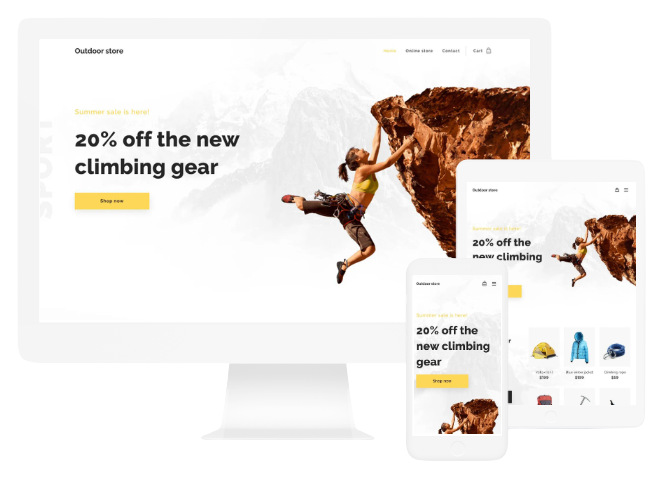
- A high percentage of online shopping occurs on mobile devices. Webnode’s clothing website templates automatically adapt to phone and tablet screens.
- Webnode offers competitive pricing. The predictable monthly cost makes budgeting easier for new store owners.
Tip: If you are looking to improve store performance, explore these e-commerce website optimization strategies to maximize conversions.
Crucial e-commerce features for your success
The right tools can turn one-time customers into repeat purchasers. Webnode's Profi package includes features that make selling clothing online easier.
Product variants: sell in all sizes, colors, and styles
Clothing comes in options. Small, medium, large. Black, white, navy. Webnode's product variant feature lets you manage all options within one product listing.
Customers see a single product page with dropdown menus to select their size and color. You manage inventory separately for each variant.
Discount codes and vouchers
Sales promotions and exclusive subscriber offers become easy with discount codes. You can create percentage or fixed-amount discounts with custom codes.
Common uses include:
- Launching new collections with introductory pricing
- Rewarding loyal customers
- Winning back abandoned carts
- Clearing seasonal inventory
Vouchers work similarly but function as gift certificates. Customers can purchase them for friends, or you can offer them as customer service goodwill gestures.
Free shipping thresholds
High shipping costs can cause cart abandonment. Webnode's Profi package lets you set free shipping thresholds on your website.
This feature does double duty. It reduces friction at checkout while increasing average order values. Customers add extra items to qualify for free shipping, boosting your revenue per order.
Maximizing sales with Webnode's Profi package
At $24.90/month when billed annually, you get unlimited products, 10GB storage, and all the crucial features that help your store succeed.
The Standard plan works well for testing your concept with up to 100 products. Profi removes limitations and adds the marketing tools you need to grow.
The product variant feature saves you hours of manual product entry while improving the customer experience.
Ready to start selling online?
With Webnode’s ecommerce website builder, launching your professional online store is easier than you think.
FAQs about starting an online clothing store
How much does it cost to start an online clothing store?
Initial investment typically ranges from $500-$2,500. This includes website hosting: $150-300 annually, business registration: $50-500, initial inventory or samples: $200-1,000, and a small marketing budget: $100-500. Your exact costs depend on your chosen business model and approach when you start a small clothing business from home.
Do I need an LLC to start a clothing brand?
You can start as a sole proprietor, but an LLC offers liability protection and tax benefits. When someone claims your product caused harm, an LLC separates your personal assets from business debts. Most clothing entrepreneurs choose an LLC structure once they start generating consistent revenue from their online boutique or clothing line.
Do you need a license to start a clothing brand online?
Licensing requirements vary by location. Most areas require a general business license and sales tax permit. Manufacturing products yourself may require additional permits. Your local business licensing office or Small Business Administration can provide specific requirements for your area when you start a clothing brand online.
Can you put your own label on wholesale clothing?
Private labeling lets you put your own label on wholesale clothing. Many wholesale suppliers offer this service. You buy their products and add your custom labels, tags, and packaging. Minimum order quantities and setup fees vary by supplier.
Create your Webnode store and launch your brand today

Csilla Huszárik has 8 years of content writing experience, combining her passion for storytelling with a tech background. She specializes in translating complex technical concepts into user-friendly, benefit-oriented content that delivers value while converting well. Having lived in multiple countries, she speaks and writes in four languages and loves exploring new destinations.