How to Monetize a Website? 12 Best Ways
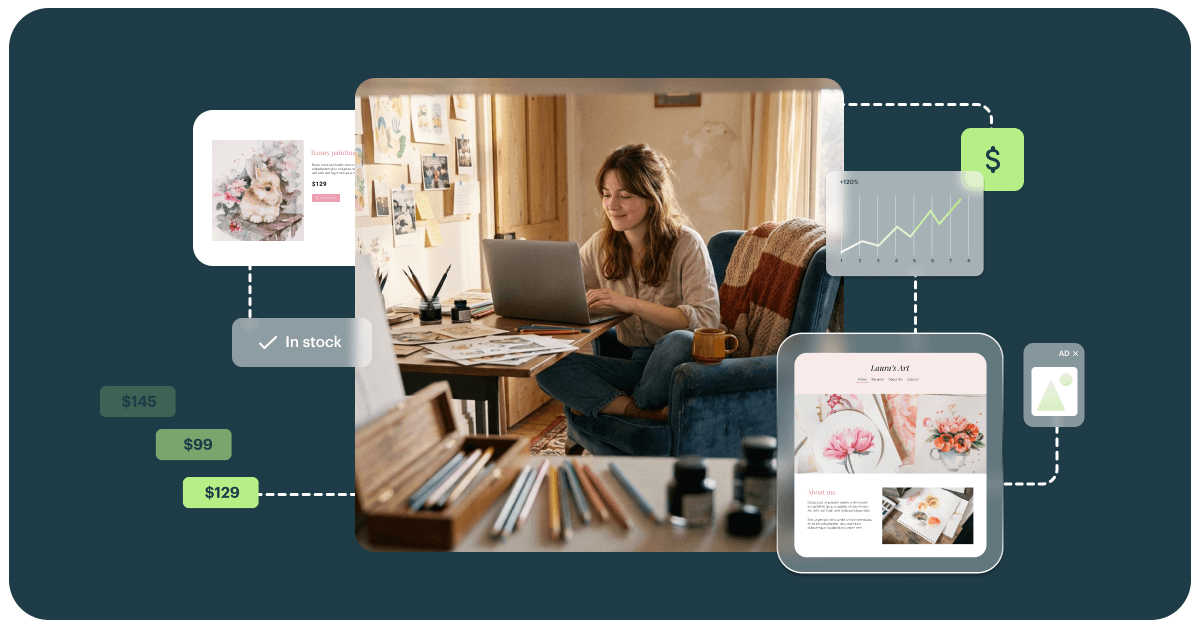
A website can do more than give your business a professional online presence. It can bring in new clients, sell products, generate commissions, or create an additional income stream from content you already publish.
If you are looking for ways to make money online as a beginner, the good news is that you do not need millions of visitors or a complicated setup to start. The right approach depends on what you already offer, who visits your site, and how you want to earn.
So, how do websites make money? In practice, they earn revenue by selling services or products, charging for expertise or access, earning commissions, displaying ads, or combining several of these methods.
A local bookkeeper may make money from a handful of qualified leads, while a content-heavy blog may need much more traffic before display ads become worthwhile.
CONTENTS
- How do websites make money?
- How much money can you make from a website
- How to start website monetization
- 12 best ways to monetize a website
- Which website monetization strategy is best for you?
- How to make website monetization work long term
How do websites make money?
Website monetization means turning your website, its audience, or the actions visitors take into revenue. That revenue does not have to come from ads. For many small businesses, the most valuable thing a website can do is bring the right person to a service page, contact form, booking page, or product.
Most website monetization strategies fall into four simple groups:
- Sell products or services directly.
- Charge for access to your expertise or content.
- Earn a commission or fee by recommending or promoting other businesses.
- Earn advertising revenue from the attention your content receives.
You can combine several methods, but more options do not automatically mean more income. A clear website with one strong offer can be more profitable than a site trying to monetize every page in a different way.

Can you monetize a website with little traffic?
Yes — if your monetization method does not depend on a large traffic volume. A service business can earn meaningful revenue from a relatively small number of visitors if those visitors are actively looking for the service.
This is why traffic quality matters. Ask not only "How many people visit my site?" but also "Are these the people I want to reach, and can they easily take the next step?"
How much money can you make from a website
There is no single average that applies to every website. Income depends on the monetization method, the value of what you sell, your audience, your conversion rate, and the amount and type of traffic you attract.
A useful way to estimate potential income is to work backward from the monetization model instead of starting with traffic alone.
How much does a website make per 1,000 views?
There is no fixed amount. For a small business website, the value of 1,000 visits depends much more on what visitors do than on the number of pageviews.
If one visitor books a $500 consultation, those 1,000 visits may already have generated $500 in revenue. A local service business can therefore earn much more from a smaller, relevant audience than a website relying mainly on advertising.
For websites that earn from ads, revenue is usually calculated using RPM, or revenue per 1,000 pageviews. We explain this in more detail in the advertising section below.
How many views do you need to make $1,000?
There is no set number.
A small business could make $1,000 from:
- two $500 service bookings,
- ten $100 product sales,
- or a combination of smaller sales and leads.
You usually need much higher traffic only if your website depends mainly on advertising. For most small businesses, it makes more sense to focus on attracting the right visitors and turning them into customers than to aim for a specific number of pageviews.

How to start website monetization
You do not need to add every possible income stream to your website. Start with the one that fits what your business already does and make sure visitors can easily take the next step.
For a small business, that might simply mean turning website visitors into inquiries, bookings, or sales. Ads, affiliate links, memberships, and other options can come later if they make sense for your audience.
Choose how your website should make money
Start with the most natural way your business already creates value.
If you provide a service, your website may only need to bring in more inquiries or bookings. When you sell products, the obvious next step is an online store. If people value your expertise, you might later add consultations, workshops, or digital products.
The important thing is not to choose the monetization method that sounds the most passive or trendy. Choose the one that fits what your visitors already come to you for.
Ask yourself:
- What do people already pay me for?
- Why do they visit my website?
- What would I like them to do next?
- How much time do I want to spend managing this income stream?
You can always add another revenue stream later. It is usually better to make one method work well than to build several half-finished ones.
Make it easy for visitors to take the next step
Before you focus on monetization, check the basics. A visitor should be able to understand your business and know what to do within a few moments.
Your website should have:
- a clear explanation of what you offer
- easy-to-find services or products
- visible contact information
- a clear call to action, such as Book, Buy, Request a Quote, or Contact Us
- a professional, mobile-friendly design
- trust signals such as reviews, real photos, credentials, or clear policies
If you are still working on these foundations, our guide to creating a small business website can help you get the essentials right first.
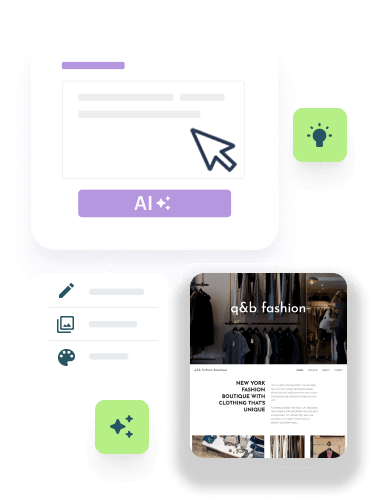
Start with a website that can grow with your business
Build a professional website with Webnode, add the features you need today, and expand later with an online store, blog, member areas, analytics, or advertising.
Bring the right people to your website
More traffic is not always better traffic. What matters is attracting people who are actually interested in what you offer.
SEO can help potential customers find you when they search for a service, product, or answer you provide. Useful content can bring in people earlier in their decision process and give them a reason to trust your business.
If you want to grow this traffic without turning marketing into another full-time job, start with SEO for your website and a practical content marketing plan for small businesses.
People are also increasingly using AI tools to research businesses, products, and services. Our guide to Generative Engine Optimization explains how clear, useful content can support visibility there too.
Track the actions that lead to revenue
Traffic tells you how many people came to your website. It does not tell you whether the website is helping your business make money.
Track the actions that matter for your monetization model:
If you monetize through… | Track |
|---|---|
Services | Calls, inquiries, quote requests, bookings |
Products | Orders, revenue, average order value |
Affiliate marketing | Affiliate clicks and commissions |
Paid content | Signups and paying subscribers |
Advertising | Ad revenue and RPM |
You do not need to monitor dozens of metrics. Start with a few numbers that show whether visitors are becoming customers or generating revenue.
Our guide to website analytics for small businesses explains how to connect website activity with real business results.
12 best ways to monetize a website
You do not need to use all 12 methods. For most small businesses, the best place to start is with the way you already make money offline: services, products, or your expertise.
Options such as advertising, sponsorships, and paid newsletters usually become more useful later, once your website has built a larger or more loyal audience.
Good starting points for most small businesses
1. Sell your services and turn visitors into clients
If you provide a service, your website can make money by bringing you inquiries, bookings, calls, or quote requests.
This works for businesses such as accountants, therapists, consultants, photographers, electricians, contractors, dog groomers, and many others.
Make it easy for visitors to understand what you offer, where you work, and how to contact or book you.
2. Sell physical products
If you sell products, your website can become your own online store.
You might sell handmade goods, beauty products, specialty foods, books, parts, clothing, or products connected to your existing business.
With Webnode, you can create an online store, add products, manage orders, and set up payment and shipping options. See our step-by-step guide to creating an online store.
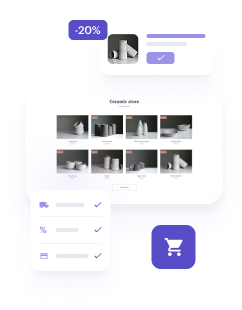
Ready to sell products from your own website?
Create a professional online store with Webnode and manage your website and orders in one place.
3. Sell digital products
Digital products are files or resources customers can buy online, such as:
- eBooks
- templates
- checklists
- worksheets
- guides
- photos
- printables
They often work well alongside an existing service.
If you use Webnode, keep in mind that downloadable files are not currently delivered automatically after purchase, so you will need to arrange delivery manually or through another service.
4. Offer memberships or premium content
A membership gives customers access to content or resources that are not available to everyone.
That could include:
- training videos
- private articles
- client resources
- templates
- recordings
- a resource library
This works best when you have something people want to use regularly, not simply one piece of content you can put behind a password.
Webnode supports member registration and password-protected pages. If you want to charge for access, you will currently need a separate payment step and manual approval.
5. Create a course, workshop, or webinar
If customers regularly ask you the same questions, you may be able to turn your knowledge into paid training.
You could offer:
- a live workshop
- a webinar
- a short course
- group training
You do not need a complicated course platform to test the idea. A simple website page can explain the topic, price, date, and registration process.
Better once you have an audience
These methods can work well, but they usually make more sense when people already visit your website regularly or trust your recommendations.
6. Start affiliate marketing
Affiliate marketing means recommending another company's product or service and earning a commission when someone buys through your link.
It works best when the recommendation is genuinely useful to your audience.
Example: A photographer might recommend equipment they use themselves. A business consultant might recommend software that solves a problem discussed in an article.
If you want to try it, learn more about improving affiliate marketing results.
Webnode also has its own affiliate program. Affiliates currently earn $100 when a referred user makes their first purchase of a yearly Premium Plan.

Already recommend website tools to your audience?
Join the Webnode Affiliate Program and earn from qualifying referrals.
“For a small affiliate website, the most important thing is not to bring in as many visitors as possible, but to bring in the right visitors at the moment when they are actually solving a purchase or a specific problem. A thousand relevant people can be more valuable to an affiliate project than tens of thousands of visits from general topics without purchasing intent.
In my opinion, the biggest mistake beginners make is choosing products mainly based on the amount of commission. It is much more important:
- whether the product suits the audience,
- you can credibly recommend it
- and you have something to add to it from your own experience.
In the long run, an affiliate built on trust and useful content works, not on simply adding as many affiliate links to the page as possible.”
Vladimir Pilny, SEO and affiliate specialist

7. Earn money by displaying ads
Website ads can create an additional income stream, but they work best on content-heavy websites where visitors mainly come to read, browse, or look for information.
They are a better fit for:
- blogs
- magazines and news-style websites
- guides and resource sites
- directories
- niche content websites
For a local business or professional service website, ads can easily become distracting. If someone visits your site to book an appointment, request a quote, or contact you, sending their attention toward an advertiser may be worth less than keeping them focused on your own business.
Which ad platforms can you use?
Google AdSense is one of the best-known options. Other ad networks, such as Mediavine, Journey by Mediavine, and Raptive, are generally aimed at more established websites and may have traffic or revenue requirements.
Webnode Premium plans support adding Google AdSense to your website.
How much traffic do you need for website ads?
There is no fixed number. Ad income depends on your topic, audience, location, and the platform you use. In general, ads need more traffic than selling your own products or services.
Can you make $100 a day with Google AdSense?
Yes, some established websites do, but there is no guaranteed traffic level. For most small businesses, it makes more sense to focus first on bookings, inquiries, and sales and treat ads as an additional income stream later.
8. Publish sponsored content
With sponsored content, another business pays you to feature its product or service.
This could be:
- an article
- a review
- a tutorial
- a newsletter placement
- another piece of content
You do not necessarily need a huge audience. A smaller website can still be attractive to a sponsor if it reaches a very specific group of people.
Only accept partnerships that make sense for your readers, and clearly disclose paid relationships.
9. Create a paid newsletter
A paid newsletter gives subscribers regular content in exchange for a fee.
It can work well if people already value your expertise and want to hear from you regularly.
For most new websites, it makes sense to build an audience first and consider charging later.
More specialized ways to monetize a website
These options can work, but they are less likely to be the first choice for a typical small business.
10. Try dropshipping or print-on-demand
Dropshipping lets you sell products that a supplier stores and ships for you.
Print-on-demand works similarly for products such as:
- T-shirts
- mugs
- posters
- tote bags
The main advantage is that you do not need to buy large amounts of inventory in advance.
The trade-off is that you have less control over product quality, packaging, and shipping. Always test the supplier before selling to customers.
11. Accept donations or voluntary support
If you provide useful content or resources for free, visitors may be willing to support your work voluntarily.
This can work for:
- nonprofits
- community projects
- creators
- educational websites
- independent publishers
Explain what contributions help you provide. A donation button without context is much less compelling.
12. Build a website and sell it
Some website owners make money by building a successful website and later selling it.
A buyer may be interested in:
- established traffic
- regular revenue
- useful content
- an email list
- a recognizable brand
This is a more advanced strategy and is unlikely to be the first choice for most small businesses.
If you are building a website primarily to support your own company, focus on making it useful and profitable for your business first.
Which website monetization strategy is best for you?
The best way to monetize a website depends on what you offer, who visits your site, and what you want those visitors to do. If you provide a service, focus first on inquiries, bookings, consultations, or quote requests. If you sell products, an online store is a natural next step. And if customers value your expertise, you may be able to add workshops, courses, or digital products.
A few examples:
- A therapist may get the most value from consultation requests or appointment bookings.
- A plumber or HVAC specialist may focus on calls and quote requests from local customers.
- A tax advisor could combine client inquiries with a paid checklist, guide, or workshop.
- A local bakery or maker may use an online store to sell products directly.
Methods such as affiliate marketing, sponsored content, paid newsletters, and display ads usually make more sense once you already have steady traffic and an audience that trusts you. They can create additional income, but they should not distract visitors from your main offer.
You do not need to choose several methods at once. Start with the option that requires the least change to your existing business and gives visitors a clear next step. Once it works reliably, you can add another revenue stream.
How to make website monetization work long term
Once your website starts generating income, focus on making that income easier to maintain rather than adding every new monetization option you come across.
Keep your main business visible
New revenue streams should support your website, not compete with its main purpose.
If you run a service business, visitors should still be able to find your services and contact you easily. If you sell products, keep the buying process clear. Ads, affiliate links, pop-ups, and additional offers should never make it harder for customers to do what they came to your website to do.
Review your most important pages occasionally and remove anything that has become outdated, distracting, or no longer useful.
Build on what already works
A successful revenue stream can often lead naturally to another one.
A consultant who receives regular inquiries might turn a frequently requested topic into a workshop. A photographer with a useful blog could add relevant affiliate recommendations. A retailer might add a new product category after seeing what customers search for most often.
If monetizing your website is part of a new business rather than an existing one, our guide to small business ideas can help you explore realistic ways to turn your skills or interests into an offer.
Create content with a purpose
Content can continue bringing potential customers to your website long after you publish it. The key is to create articles, guides, videos, or resources that answer questions connected to what you sell.
For example, an HVAC company could explain when an air conditioner needs servicing, while a tax advisor could publish a checklist for new business owners. That content can lead naturally to a booking, product, course, affiliate recommendation, or another relevant offer.
If content will be an important part of your monetization strategy, our step-by-step guide to starting a blog can help you set one up.
Review what earns its place on your website
Not every monetization idea will be worth keeping.
Check from time to time which offers, products, pages, or partnerships actually generate revenue. If something creates extra work, distracts visitors, or produces very little return, you do not have to keep it simply because other websites use it.
As your business develops, our guide to growing a small business offers practical ideas for attracting customers and building more stable revenue.
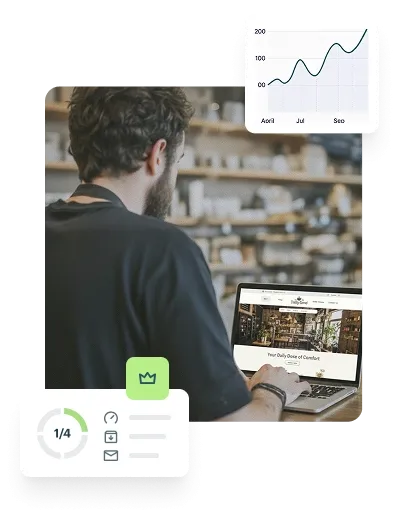
Put your monetization plan into action
Create a professional website with Webnode, start with the income stream that fits your business, and add new features as your needs grow.
A website does not need to make money in every possible way. It needs to help the right people take the next step with your business. Start there, keep what works, and expand only when it makes sense.

Martina Zrzavá Libřická is a Freelance SEO Consultant at MartiSEO with 13+ years experience both in-house (IKEA, Emplifi – formerly Socialbakers) and agency (Accenture). She specializes in International SEO, Product Management and Strategy. Martina is an active mentor at Women in Tech SEO, The Freelance Coalition for Developing Countries and privately. She enjoys organizing workshops and trainings for organizations or individuals. Martina actively publishes about SEO on LinkedIn in the Czech Republic to dispel the myths and educate people in organic search topics.